
What Is Organic Viticulture?
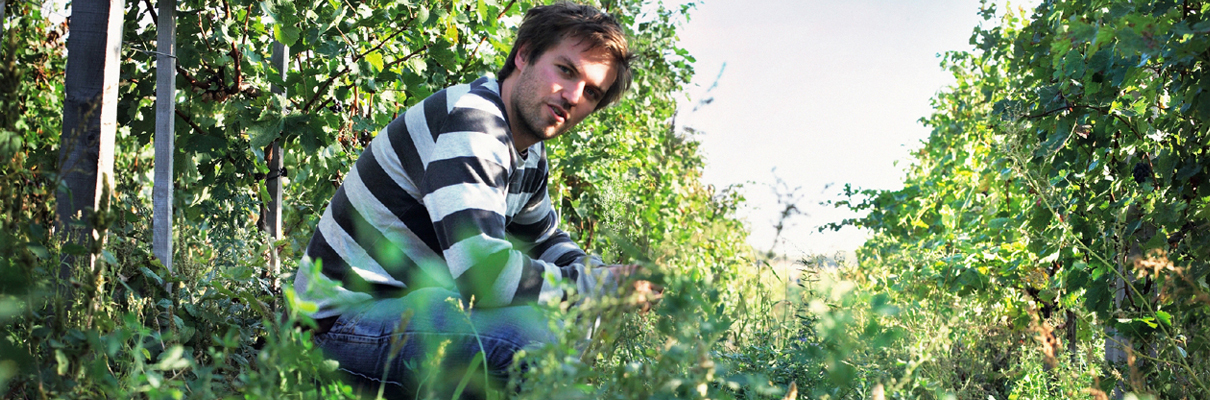
In the vineyard at Weninger Organic Winery
What does organic viticulture mean?
For us, organic viticulture starts with outstanding wine quality. Our growers make wines with character that express their site, grape variety and terroir. Organic farming also means working with respect for nature and the environment, thinking in terms of ecological cycles, and avoiding synthetic pesticides, readily soluble mineral fertilisers and genetic engineering.
Choosing the Right Variety Matters!
Not every variety suits every site. That is nothing new, but the choice of variety matters particularly in organic viticulture because few treatments are approved for diseases such as mildew. Fungus-resistant varieties known as PIWIs have gained ground since the early 1990s. Classics such as Riesling and Pinot Noir remain among Germany’s favourite grapes.
More greenery, less fertiliser
Unlike conventional growing methods, organic farming does not base fertilisation on nutrient removal alone. Rather than primarily replacing the nutrients taken from the soil, it aims to create favourable conditions for beneficial soil organisms. Fertility depends largely on the right combination of fertilisation, soil management and cover crops. Growing legumes such as clover, which work with bacteria to fix atmospheric nitrogen naturally, provides an environmentally friendly way to fertilise vineyards. Mechanical measures such as pruning, together with cultivation techniques, aim to keep weed and disease pressure as low as possible. Despite all these precautions, including herbal sprays with sulphur, lime or copper added where necessary, organic growers must still expect a certain amount of pest-related crop loss.
Lower Yields, Higher Quality
Pests are only one cause of lower yields for organic growers. Going without synthetic chemical fertilisers also reduces the harvest. Average yields are around 25–50% below those of conventional viticulture. Lower yields, however, produce richer wines with great potential. They reflect their grape variety and site and offer a range of constituents, a broad spectrum of acidity and an abundance of aromas specific to their terroir.
A Taste of the Place
emerges where tradition meets modern methods, enthusiasm goes hand in hand with know-how and less can be more. The cellar produces clean, high-quality wines that reflect their varieties and regions, using as few processing aids as possible. The EU rules on organic farming (2092/91) set minimum standards, specifying which aids may be used in the vineyard and cellar. The growing associations to which most organic winegrowers belong, such as Demeter or Nature et Progrès, generally impose stricter requirements than the EU.
Organic winemakers therefore avoid most of the fining agents and processing aids permitted in conventional winemaking. Unless EU rules provide otherwise, permitted substances must be derived from organic materials. Natural bentonite or egg white are often used to clarify the wines.
It is often hard to do without it entirely
Sulphur is also added to organic wine to stabilise its flavour and help it withstand storage and transport. In aqueous solution it forms sulphur dioxide or sulphites, which act as preservatives. Compared with conventional wine, stricter limits apply to Organic Wine , however, is subject to stricter limits on sulphur dioxide. Dry red wine with 2 g/l of residual sugar may contain no more than 100 mg/l of sulphur dioxide. For white and rosé wines with a comparable residual sugar level, the limit is 150 mg/l. Organic wines therefore contain at least one third less sulphite than conventional wines.
The Importance of Inspections
An independent organisation inspects and certifies the wineries at least once a year, with additional unannounced inspections. The certification number on the label is proof of this guarantee. Inspectors check that wineries strictly avoid conventional chemical crop protection products and synthetic fertilisers and monitor their cellar practices.


 +49 (0) 8362 9308800