

Print
Curicó Valley
The Mapuche, an Indigenous South American people, gave the Chilean town of Curicó its name. The town lies about 200 km south of Santiago and in turn lends its name to the wine region. Curicó means ‘black water’, though today red is the colour of greatest interest here. The Spanish brought the first vines to the valley in the sixteenth century, but it took investment from abroad in the 1980s to make wines suited to the world market. Like the country itself, the region is full of contrasts. There are fairly fertile alluvial soils near the rivers and dry volcanic soils elsewhere. Wide differences between day and night temperatures make for powerful, well-structured wines. Red varieties such as Cabernet Sauvignon thrive, and it covers nearly 40% of the area. Cabernet Franc, Carménère, Merlot, Pinot Noir and Syrah also show their strengths in these conditions. Chilean white wine is made in small quantities, chiefly from Chardonnay, Sauvignon Blanc and Chenin Blanc.
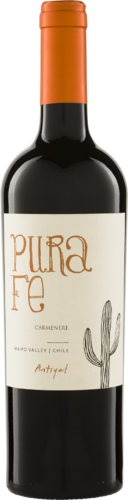
Pura Fe Carmenere 2018 Antiyal Organic WineProduct no.: N213550026.95 € / bottle(s) *
1 l = 35.93 €
can be shipped within 1 bis 3 days |
*
Prices incl. VAT, plus delivery

 +49 (0) 8362 9308800